Learning to write begins long before children can independently form complete words.
For preschoolers, alphabet tracing activities for kids can be a simple way to become familiar with letter shapes while developing early pencil-control skills.
The best approach is to make tracing gradual, interactive and fun.
What Is Alphabet Tracing?
Alphabet tracing involves following a visual guide to practise the shape of a letter.
For example, a child might follow dotted lines to form:
A
After repeated practice, they can gradually attempt the letter without the guide.
Tracing provides a bridge between recognising a letter and eventually writing it independently.
- Start With Basic Lines
Before introducing the complete alphabet, let your child practise:
- Vertical lines
- Horizontal lines
- Curved lines
- Zigzags
- Circles
- Simple shapes
These activities can help children become comfortable controlling a pencil.
- Begin With Large Letters
Large letters can be easier for young children to follow.
Start with uppercase letters and gradually move towards smaller letters as pencil control improves.
- Trace One Letter at a Time
Instead of introducing all 26 letters at once, focus on a small number of letters.
For example:
A → B → C
Review them before moving forward.
- Connect Letters With Pictures
Make tracing more meaningful by connecting each letter with a familiar word.
A – Apple
B – Ball
C – Cat
D – Dog
The picture provides a visual association that can make the letter easier to remember.
- Say the Letter While Tracing
Ask your child to say the letter while tracing it.
You can also introduce the letter sound when appropriate.
This combines:
Seeing + saying + writing
into one simple activity.
- Add Colouring
After tracing a letter, let your child colour the associated picture.
This turns writing practice into a more creative activity.
- Find the Letter
After tracing a letter, show your child several letters and ask them to find the one they just practised.
For example:
A B D A C
“Can you find the A’s?”
This combines tracing with recognition.
- Practise Uppercase and Lowercase
Once your child is comfortable with uppercase letters, introduce lowercase forms.
For example:
A → a
B → b
C → c
Don’t rush this step. Give children plenty of opportunities to see and practise both forms.
- Trace Letters in Everyday Life
You can point out letters on:
- Children’s books
- Alphabet charts
- Signs
- Food packaging
- Toys
- Labels
Ask your child:
“Can you find the letter B?”
This turns everyday surroundings into a learning opportunity.
- Use an Alphabet Activity Book
Creating tracing worksheets every day can be time-consuming for parents.
A structured alphabet activity book can make the process easier by providing ready-made activities.
A good activity book can combine:
- Letter tracing
- Letter recognition
- Matching
- Colouring
- Picture activities
- Early writing practice
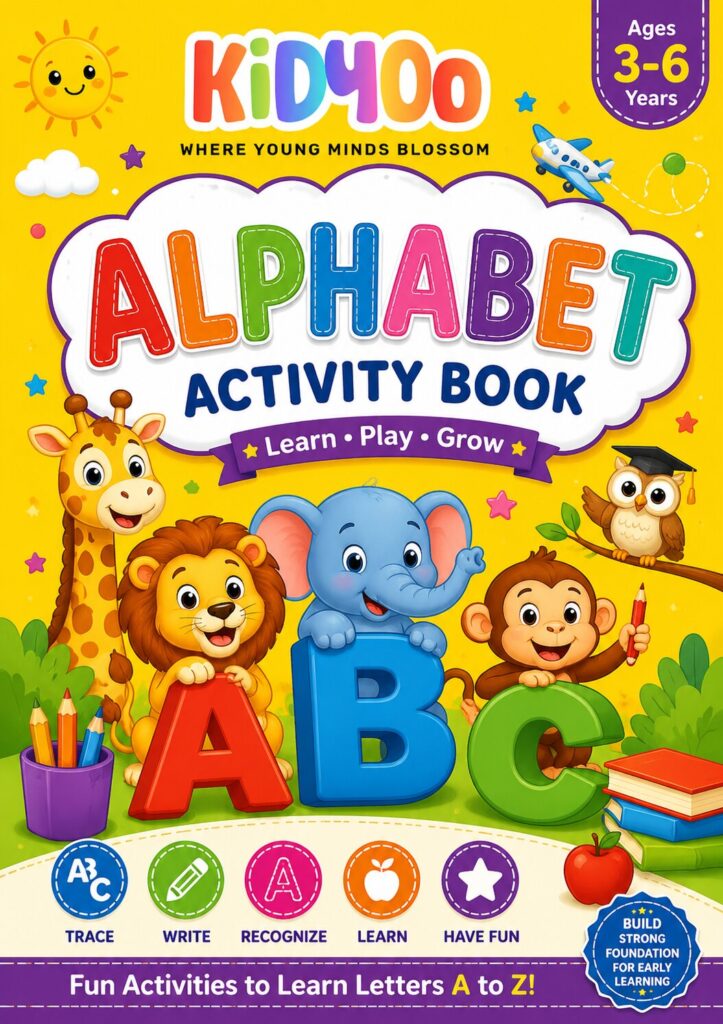
Looking for a Ready-to-Use Alphabet Activity Book?
Kidyoo provides children’s learning and activity resources designed for hands-on and screen-free learning.
Explore the Kidyoo Alphabet Activity Book for an easy way to add structured alphabet practice to your child’s routine.
[Shop Kidyoo Alphabet Activity Books]
A Simple 10-Minute Tracing Routine
Parents can try this simple routine at home:
2 minutes: Review the letter
3 minutes: Trace the letter
2 minutes: Say the letter and sound
2 minutes: Find the letter
1 minute: Colour the related picture
This keeps the activity short and manageable.
Common Mistakes Parents Should Avoid
Making tracing sessions too long
Young children can lose interest quickly.
Keep sessions short and take breaks.
Expecting perfect handwriting
Early tracing is about practice, not perfection.
Praise effort and improvement.
Introducing too many letters
Focus on a few letters and review them regularly.
Treating tracing as handwriting only
Combine tracing with sounds, pictures, games and recognition.
This creates a richer learning experience.
When Should Children Start Alphabet Tracing?
There isn’t one exact age that works for every child.
Some children may enjoy simple pre-writing activities during the toddler years, while more structured tracing may become appropriate during preschool.
Look for signs that your child is interested in drawing, making lines or holding crayons and pencils.
Keep the activities playful rather than forcing them.
Final Thoughts
Alphabet tracing can be an easy and enjoyable part of early learning.
Start with simple lines, move to large letters, introduce letters gradually and combine tracing with pictures, sounds and games.
For parents looking for alphabet tracing activities for kids in India, a structured alphabet activity book can provide a convenient screen-free resource for practising A–Z at home.